This article from the Guardian looks at regulating video games and the fact that in America, politicians have vowed to advocate the regulation of content in violent video games, as the content may have an effect on a youngner audience.
Important quotes from the article
Hillary Clinton has never been a fan of computer games.
In response to a Common Sense Media poll of the attitudes of the candidates to video game entertainment, Clinton argued,
"When I am President, I will work to protect children from inappropriate video game content"
Barack Obama has suggested on several occasions that gamers are slackers. "It's time to turn off your Game Boys," he said at an Austin, Texas event last February. He's also returned a donation made by the Electronic Software Association's Doug Lowenstein and has repeatedly argued that working harder means playing fewer games.
In the CSM poll, Obama promoted industry self-regulation:
I would call upon the video game industry to give parents better information about programs and video games by improving the voluntary rating system we currently have. Broadcasters and video game producers should take it upon themselves to improve this system to include easier to find and easier to understand descriptions of exactly what kind of content is included. But if the industry fails to act, then my administration would.
So it's unsurprising that when the question was posed, point blank, in the CSM poll, he (and his policy-writers) played a cautious, hands-off game; he applauds the work of the internal ratings boards, but suggests that there's much more to do to keep inappropriate content away from kids:
If the industry does not continue to make progress in keeping video games with intense violence and adult content away from children, we will need to consider further steps to ensure that parents' decisions about their children's exposure to these games are not being undermined by retailers, advertisers and manufacturers.
http://www.guardian.co.uk/technology/gamesblog/2008/jan/09/gamesgetpolitical?INTCMP=SRCH
Tuesday, January 18, 2011

Guardian article on violent video games
This post includes an article from the Guardian and revolves around violent video games. By including this article, I will select quotes to include in my essay which revolve around public concern surrounding violent video games.
Important Quotes from the article:
After the murder of James Bulger in 1993 there were various calls for the banning of "video nasties". At the time MPs called for certain films to be banned.
There was a similar outcry after the Columbine school shooting, when Eric Harris and Dylan Klebold murdered 12 students and a teacher and wounded 23 others before shooting themselves at the high school in Littleton, Colorado, in April 1999.
They were known to enjoy playing Doom, a game licensed by the US military to train soldiers to kill.
The killing of Stefan Pakeerah in Leicester in February 2004, which his parents believe was inspired by the game Manhunt, put the games industry back in the spotlight.
Stefan, 14, was stabbed and beaten repeatedly with a hammer in an attack his mother described as mimicking the gameplay in Manhunt. Warren Leblanc admitted to the killing and was jailed for life. A number of shops, including Dixons, stopped selling the game.
Manhunt 2, released earlier this year, was the first game in a decade to be banned in Britain. With its "unrelenting focus on brutal slaying" the British Board of Film Classification (BBFC) - which rates video games and films - rejected the game after finding it "constantly encourages visceral killing".
Yet, in 2005, the BBFC said there was no evidence directly linking playing of games with violent behaviour. A government study last year also downplayed the link between video games and violence.
http://www.guardian.co.uk/politics/2007/aug/28/conservatives.ukcrime1?INTCMP=SRCH
Wednesday, January 12, 2011
Previous Critical Investigations Feedback
http://jaleesadenton-mest4.blogspot.com/- Jaleesa
In relation to the essay, this person managed to get an A grade, as they demonstrated knowledge and understanding of media concepts such as representation; 'A constructionist view of representation which “suggests that our knowledge of the world is constructed by media representations”[3] By doing this, the person has also managed to state a debate, giving different opinions.
As well as this , this person has managed to undertake and apply relevant research, such as theories and research, for example 'The concept of stereotypes has been developed by Stuart Hall, whereby he stated that “ethnic minorities are continually misrepresented by racial (and racist) stereotypes.”[4] “Media stereotyping occurs when the roles and behaviour on personal characteristics of a particular group are portrayed in a limited fashion.”[5] By also supporting research with theorists, the essay is more developed and concise, as the hypothesis is supported by theorists such as Stuart Hall, therefore contextual research is adapted and supported by quotes.
In accordance, the essay is worthy of an A grade, as they have mentioned examples in the media, as well as their two texts in order to address thier points, for example 'Dev Alahan is an Asian corner-shop owner in the British soap-opera “Coronation Street” (ITV). “Coronation Street” has been accused of using this stereotypical image in order to represent all Asians as it may be believed that all corner-shops are owned by this ethnic group'. Similarly, the essay is of a high standard, as figures are given to support the hypothesis, 'With over 2000 employees at the BBC, only 11.5% of them are from ethnic minorities. This reflects what is shown on-screen as some soap-operas either do not have ethnic characters or have only just started showcasing them'. In this way, the essay is worthy of an A grade, as research is derived from sources and is balanced, with figures and quotes by theorists, books revolving around race and representations of ethnic minorities and people working in the media is also given.
http://filmauthorship.blogspot.com/ - Jatinder
In my opinion, this essay is worthy of an A grade, as this candidate has managed to demonstrate knowledge and understanding of media concepts such as stereotypes and roles of women. In conjunction to the essay, the person has referenced to texts where women are represented in different ways, for example "Scream" (1997), Sydney, the protagonist, has sex but does not die. This clearly shows that society has become more progressive and as a result stereotypes have changed. By giving historical examples, the person has looked into the context of women in films and showing how their roles have changed- from vulnerable to more active.
As well as this, the person has managed to demonstrate the ability to undertake, apply and present appropriate research, for example the candidate has referenced to theorists such as Laura Mulvey and the male gaze; looking at how audiences such as men look towards women in films and the different stereotypes of women. Yet, the person has also put forward a straightforward argument, looking at the fact that stereotypes have not changed, e.g 'women are still objectified with The Sun's "page 3 girl", clearly proving Mulvey's ideas that they are there "to-be-looked-at". Some stereotypes will always remain as the media will inject hegemonic attitudes of women being sub-ordinate to men'. Therefore, the person has looked at the fact that women are objectified across different platforms such as print on Page 3 in the Sun, where women are objects for the male gaze.
On the whole, this essay is of an A grade standard, as the candidate has referred to contextual research and has given examples to different texts by Tarantino and other texts, where the roles of women have been changed or have remained the same. Whats more, the candidate has also cited theories and theorists such as Laura Mulvey, who looks at the male gaze, therefore the essay is well rounded, though more quotes have been referenced in order to back up some of the points made.
http://avneet-med6.blogspot.com/- Avneet
This specific essay is of an A grade standard, as the candidate has referenced some examples such as Sarah Connor in ‘The Terminator’ in 1984 and Angelina Jolie in ‘Lara Croft: Tomb Raider’ alongside her main text Wanted (2008)which backs up her hypothesis on whether women in action movies are represented as empowered female role models or as sex objects? By doing this, she looks at the changing role of women in action movies, with the few references to historical examples in order to justify some points. Notably, she has focused in some degree of detail on her main text, paying attention to the concepts of the action genre and the director of the film 'Wanted', for example the conventions of the genre include 'fast cars, explosions, and guns clearly connote action; whereas an ordinary guy turning into the number one assassin clearly conveys fantasy. Though, she also refers to the director's decisions and role reversals, offering alternative representations of women in action films , for example Bekmambetov reverses Propp’s narrative theory[7] of the hero rescuing the ‘damsel in distress’, as Fox rescues the male character (Wesley) in the opening of the movie.
Interestingly, she also refers to theorists such as Freud and the connotations of weapons , as seen in the essay, 'The Freudian theory suggests “men unconsciously see women as castrated and this causes them to feel anxiety which is why fetishization objects are used in order to reduce anxiety.”[10] As well as this, she refers to phallic symbols and their importance to females in action films, with examples from texts shown to back up her point, as evident in the essay, "....need for a phallic symbol, usually a gun, which is also typical iconography for action genre. One examples is “Lara Croft: Tomb Raider”, the leading female, Lara (played by Angelina Jolie) must sleep with a knife. The knife can be seen as a phallic symbol, put there by the male director to stop “castration anxiety”[11] in order to stop losing “power or control”[12]
What's more, the essay also gives different views on the representation of women, with some references to different genres such as science fiction, and how women are alternatively represented as being brave and active, ‘Alien’ was one of the first action movies to have an active empowered female lead role, which was played by Sigourney Weaver (Ripley) who is a “resourceful, self-reliant, hard-assed, feminist action heroine”[23]. Crucially, the essay cites quotations from theorists such as Miles in this case, who looks at action films depicting women, for example Miles (1975) found “action adventure shows only 15% of the leading characters were women”[20] This all changed when “the second wave [of] feminism”[21] took place and there was a “presence in society for equality”[22]
On the whole, the essay is extensively resourced and well supported, with theories and quotes from theorists mentioned and linked to her points. In addition, she has referred to context; where women were presented both positively and negatively, as emphasised in 'Alien'. As well as this, she has also paid attention to concepts such as connotations and symbols in action films.
Tuesday, January 4, 2011
Task 6: Introduction and First Paragraph
Why are video games such as Call of Duty Modern Warfare 2 and Grand Theft Auto IV becoming more violent? How is this a concern?
Within society, the video game industry is hugely successful, with sales of video games and consoles reaching $50 billion in 2008. In effect video games are considered now as 'one of the leading forms of media consumption', with sales rivaling the most successful Hollywood blockbusters'. However, in the media, certain violent video games have proven to be a serious concern with different audiences such as parents, who feel that they cause aggression and violent behaviour in children. In accordance to this, scientific evidence conducted by scientists such as Professor Bruce Bartholow and Anderson and Dill suggest that violent games do, in fact cause aggression and violent behaviour in the audience. Therefore, the media seems to blame gaming institutions such as Infinity Ward, Ubisoft and Rockstar Games for creating games which endorse violence and a result in aggression on the audience. In this essay, I will discuss whether video games are becoming violent and whether or not they are a concern.
Generally, video game institutions such as Infinity Ward and Rockstar games seem to make games which are more violent, as they mainly target the audience's preferences, as most of the violent video games are very male orientated, therefore may be appealing to males, as biologically, males tend to be more aggressive, as shown at a young age where boys tend to engage in play fighting, in contrast to girls who seem to be more passive. Though, another reason why thhe video game institutions make games more violent, is that the audience want to play games which are real, therefore games such as Call of Duty : Modern Warfare 2 place the player in the game, especially with FPS (First Person Shooters). Therefore, the audience become 'intentionally and actively involved in the action.' Also, the position of the player as the first person shooter allows them to ' interact with the virtual environments in a more personal way' and also allow them to mentally insert themselves into the action." Most importantly, violent video games also give 'players an opportunity to practice violent scripts', with players therefore tending to be more aggressive, yet active.
In addition, violent video games may be appealing to the audience, as they offer 'varying levels of difficulty', therefore the audience may look to play violent video games, as they get a chance to progress and come across enemies which are harder to kill. Evidently, in Grand Theft Auto IV players have to complete missions in order to progress, with rewards and special items available such as health packs , which seem to enable the audience to play the game for a longer period of time, yet offers 'instant gratification' to the audience, as they can identify with thier player in the game and can play games for escapism.
Task 5: Detailed Essay Plan
Why are video games such as Call of Duty:Modern Warfare 2 and Grand Theft Auto IV becoming more violent? How is this a concern?
Introduction: Giving an brief insight into the games industry and a brief history of video games and the growing concern about violent video games on the the audience and in society. In conjunction to my independent study, the introduction will look at how video games fit into the contemporary landscape.
1 How video games are marketed and how successful the video games industry is
"In 2008, worldwide sales of video game hardware and software passed $50 billion , more than double the annual sales posted in 2004 and 2005, and $5 billion more than in 2007".
"Video games are now one of the leading forms of media consumption, with sales rivaling the most successful Hollywood blockbusters".
"Marketing executives in a wide range of industries are turning to video games to promote their products through movie tie-ins and in-game advertisements".
2 Video game audiences and the reasons why the audience play violent video games, with cause for concern, as children play violent video games. Though, I will link this paragraph to the Uses and Gratifications Theory, as audience play games for diversion, personal identity and ability to fit into a crowd. (S)
Analysis of Call of Duty: Modern Warfare 2 and Doom and how violent video games enable the audience to be involved in the game.
" Videogame players play in isolation because videogames are ultimately a lonely medium."
" The culture of video games is heavily orientated to the individual competition and extraterrestrial warfare, destruction of the planet and a science fiction escape from its consequences".
"Video game play is interactive, whereas television viewing is physically passive"
"Children look for video games that offer an intellectual challenge. Most games have varying levels of difficulty and children look to mastering one level and move on to a more challenging level."
"Pleasures and rewards are offered in spoon fed fashion and with immediate effect for instant gratification."
" The active nature of video games gives players an opportunity to practice violent scripts"
"... aggressive children may be drawn to violent video games and entertainment, which in turn increases their aggression and causes them to want more exposure".
"Today, most children play real-time, first- person shooter (FPS) games in which "the players view the world through the eyes of the video game character that they control".
" ... those who play video games become intentionally and actively involved in the action."
" Kids not only watch realistic characters spurting blood and pulling heads, spinal cords and beating hearts out of bodies, but they are creating mayhem and are rewarded with extra points for doing so."
"Because of this first-person perspective, players interact with the virtual environments in a more personal way, often mentally inserting themselves into the action."
Paragraph 1
This paragraph will look at the reasons why violent video games are violent, with specific reference to the marketing of video games and the effect on the audience, with the need to focus on regulating violent video games. (S) (E) (H) (P) (I)
"The video game manufacturers should recognise they've gone too far and agree to stop making games that portray extreme violence or sexual activity"
In 1994, the video game industry responded by creating the Entertainment Software Rating Board (ESRB), a semi- independent review board responsible for providing an age recommendation for video games as well as content warnings, such as language, sexual themes and violence.
The public outcry on regulating video games reached a peak with the 2004 introduction of Grand Theft Auto: San Andreas, which featured corrupt cops, racism, drive-by shootings, pipe beatings and explicit sex. An earlier version of the game awarded points to players who made drug deals, killed police officers and solicited and murdered prostitutes.
Rather than limiting sales, controversies often fueled demand for such games, as teens and older children flocked to stores to purchase mature rated games.
" Various commentators have pointed out that the incessant drive for profits has sometimes meant that companies have failed to consider the possible impact of increasing realistic violence on people who have bought their games".
"Invariably such stories include a call for tighter censorship of video games and assume as proven that such games are invariably bad for children and teenagers who play them, primarily because they have the power to change young people's personalities and value systems for the worse".
"...the existing video game rating system, the content of much entertainment media, and the marketing of those media combine to produce “a powerful desensitization intervention on a global level.”
Paragraph 2
This paragraph will look at the concerns of violent video games and the fact that some scientific research has shown that violent video games cause aggression on the audience (S). In accordance to this, I will refer to scientists such as Anderson and Dill which have conducted experiments on children to show whether video games make teenagers aggressive. (A) I will also link this paragraph to different media forms such as television and movies, where there is a similar type of violence. Link to politics and the need to regulate violent video games
Link to Grand Theft Auto IV and how it rewards players for killing (ML) (G)
"... a violent video game may be more harmful than violent television and movies because the video game is interactive, very engrossing and require the player to identify with the aggressor".
"students who reported playing more violent video games in junior and high school were engaged in more aggressive behaviour."
"In the short run, playing a violent video game appears to affect aggression by priming aggressive thoughts. Longer-term effects are likely to be longer lasting as well, as the player learns and practices new aggression-related scripts that can become more and more accessible for use when real-life conflict situations arise."
"The potential effects (and theoretical perspectives) of video games on aggression are similar to those of television violence."
" Violence is not just a feature of video game culture. Violence is... everywhere. You can't avoid it. We can plug into violence on television, popular film, the Internet, radio, advertisements, brochures, magazines, newspapers, novels, theatre, MTV..."
"Even before the GTA: San Andreas controversy, politicians called for government regulation in order to ensure that children could not obtain age-inappropriate games because they believed that violent video games increased violence in children".
Paragraph 3
In contrast to the second paragraph , I will show how violent video games are not a serious concern, as they can teach the audience useful skills and enhance their current skills such as coordination, navigation and other skills. (G) (A)
"The kinds of activities involved in playing video games, it is argued by some can promote eye hand coordination or teach specific skills in spatial visualization or mathematics".
"Research has also surfaced to show that video games engage young people's minds in such as way that they may help to cultivate important new cognitive skills, which enable children and teenagers to process information more effectively than older generations.."
" Videogames can produce positive effects (e.g. improved perceptual motor skills) even if there was never any intention of producing such an effect".
This paragraph will look at the fact that violent games result in the audience becoming desensitized to real violence. In accordance to this, I will apply audience theory such as Desensitization and the fact that audiences cannot determine real life violence from game violence. Link to scientists such as Anderson and Dill, Professor Bruce Bartholow and Dr Cheryl Olson. Evidence of tests carried out by Anderson and Dill, Prof Bruce Bartholow
"...exposure to violent video games can desensitize individuals to real-life violence. According to the investigators, this is first documented finding that video-games can alter physiological responses typically aroused by real violence".
“The results demonstrate that playing violent video games, even for just 20 minutes, can cause people to become less physiologically aroused by real violence,”
“Participants randomly assigned to play a violent video game had relatively lower heart rates and galvanic skin responses while watching footage of people being beaten, stabbed and shot than did those randomly assigned to play nonviolent video games.
“... individuals who play violent video games habituate or ‘get used to’ all the violence and eventually become physiologically numb to it.”
“In short, the modern entertainment media landscape could accurately be described as an effective systematic violence desensitization tool,”
"video games with violent content might desensitise children to violence in the real world".
watching gore or violence in video games and not seeing the consequences that violence might have in real life, and children less concerned about suffering and have empathy for victims.
Paragraph 5
On the contrary, this paragraph suggests that video games are not a concern as they teach the audience vital life skills which could be adapted in thier future, for example in employment. (S)
" Videogames can also offer clear objectives, which are especially appealing because these goals can be adapted to the skills and knowledge of the player."
" Videogames may also produce different types and amounts of learning depending on whether they focus on drill-and -practice of factual information, or simulations which model reality"
"playing videogames can produce positive outcomes, such as increased persisitance at difficult tasks"
" Research on games suggests that video games might help players practice decision making."
"Violent video games provide a forum for learning and practicing aggressive solutions to conflict situations."
Paragraph 6
The fact that violent video games cause addiction is another concern, which may result in the audience becoming unhealthy as a result.
"Addiction to video games may be like any other form of addictive behaviour. Players feel compelled constantly to be involved with these games and may display a lack of interest in other activities"
"Not only did the games preoccupy their time, they also frequently exposed youngsters to and involved them actively in antisocial and violent themes giving rise to worries about unwanted behavioural effects."
"Pleasures and rewards are offered in spoon fed fashion and with immediate effect for instant gratification."
"... video games are seen to exert a considerable hold over their players who play with an apparent unhealthy frequency and for lengthy periods of time."
Paragraph 7
Yet, the fact that violent video games are a concern has not been proven scientifically, therefore the idea of campaigning against violent video games is quite pointless. Also, it is much harder to find the sole cause why video games are cause violent behaviour in the audience. I will link the points with ideas by Professor David Buckingham, Prof Bruce Bartholow
"And yet, of course, video games are also fun, and people learn things from them, they can be quite sociable experiences, and so on. Again, it doesn't make much sense to separate the positives from the negatives, or to see this in simple either/or terms".
"The debate we are seeing is very similar to the one that has raged for years about TV. The truth is there are many factors that can lead to violence, such as being withdrawn and isolated, so it is hard to say it is because of one thing.
"The truth is there are many factors that can lead to violence, such as being withdrawn and isolated, so it is hard to say it is because of one thing".
"...the studies do not necessarily provide conclusive results because psychologists cannot perform pure clinical experiments, only observational studies, which do not lend themselves to qualitative results."
"... authors of carefully written psychological articles tread cautiously between the words “link” and “cause,” refusing to say that violent video games “cause” violence".
Paragraph 8
The links with the fact that the public seemed to be concerned with violent video games and the need for regulation has been debated considerably in the media, with politician sbeing urged to do something about the problem. In accordance to this, I will refer to moral panics and the political aspect of the games. Reception Theory will also be applied to this paragraph
"Early critics voiced concern that video games turned children into brainless zombies".
"video games have a much bigger negative influence on kids than pornography", a leading porn star has claimed.
Violent video games make audience more willing to become the characters they play as. Therefore, many audiences choose to adopt a more aggressive look, as seen in True Crime.
Paragraph 9
This paragrph contrasts with the last one, as the media seems to exaggerate and even sensationalize news surrounding violent video games , in order to inject messages that video games cause players to become violent, without any solid proof. By linking Cultivation theory and Hypodermic Needle Theory, I will show how people say video games are bad but don't have an overall idea of video games.
"So the argument would be that people need to be informed about what they're letting themselves in for, they need to understand how to deal with risk, rather than simply trying to keep them away from it".
"So for me that means you need some kind of educational response to this, rather than saying something is bad or risky, so let's just ban it.
"The media picks up and runs these newly discovered stories about the “epidemic” of video game violence, even though very few links are authentic or newsworthy".
"The public reacts by searching for similar links between video games and violence, and, because they want to find a link, they “find” it in other places".
"The media sensationalizes the effects that violent video games had on the event in order to create entertaining stories for the evening news".
"Yet seldom do such critics present any conclusive evidence to back up the accusations they level against video games"
Paragraph 10
The fact that video games don't seem to teach the audience anything useful, makes violent video games a serious concern, as video games are intentionally meant to be educational. Dumbing Down Theory and the fact that audiences replicate what they see in video games , for example WWE wrestling - Copycat Theory.
" Kids not only watch realistic characters spurting blood and pulling heads, spinal cords and beating hearts out of bodies, but they are creating mayhem and are rewarded with extra points for doing so."
" Fantasizing and rehearsing the wrestling moves appears to either create, or at least reinforce, the aggressive attitudes and behaviors of children."
" The active nature of video games gives players an opportunity to practice violent scripts"
"This criticism centres on the fact that the video game is an utterly inconsequential activity that neither requires nor develops imagination."
Paragraph 11
Yet, violent video games may not be a concern, as the audience can vent thier frustration in the games by identifying with the player in the game. Therefore, violent video games can be beneficial as they can reduce stress. Also, they may be helpful to people with serious diseases or illness and can be an effective remedy. (S)
Call of Duty Modern Warfare 2 and GTA IV will be used to support my statement.
"It has been argued that the aggressive content in video games could allow players to release their stress and aggression in a non destructive way, and, in fact, would have the effect of relaxing them".
'games can also help to control diabetes and pain and work as a tool to complement psychotherapy'.
Paragraph 12
On the other hand, violent video games may be a serious concern, as they can cause psychological factors on the audience and can affect the player's behaviour. In conjunction to this point, I will refer to the work of Professor Bruce Bartholow, Vince Matthews and
"brain scans of kids who played a violent video game showed an increase in emotional arousal – and a corresponding decrease of activity in brain areas involved in self-control, inhibition and attention".
"The scans showed a negative effect on the brains of the teens who played “Medal of Honor” for 30 minutes. That same effect was not present in the kids who played “Need for Speed.”
"the subjects who showed the smallest p300 response to violent images also were the most aggressive in blasting the ears of their perceived opponents. The implication was clear: Over time, players of violent video games appeared to become desensitized to real-world violence.
' increased activity in the brain region that governs emotional arousal, and decreased activity in the part of the brain associated with control, focus and concentration'.
"In psychoanalytic theory , sexuality and aggression serve as the two major drives. Both drives arrogate for release that may happen in reality or in fantasy, the latter called symbolic catharsis".
Conclusion
Summarise the essay, giving opinion on the whether violent video games are a serious concern or not and how video games are getting violent- through the use of graphics, interface etc.
I will also support my opinion with historical information showing how video games have become violent and whether or not they are a concern
Introduction: Giving an brief insight into the games industry and a brief history of video games and the growing concern about violent video games on the the audience and in society. In conjunction to my independent study, the introduction will look at how video games fit into the contemporary landscape.
1 How video games are marketed and how successful the video games industry is
"In 2008, worldwide sales of video game hardware and software passed $50 billion , more than double the annual sales posted in 2004 and 2005, and $5 billion more than in 2007".
"Video games are now one of the leading forms of media consumption, with sales rivaling the most successful Hollywood blockbusters".
"Marketing executives in a wide range of industries are turning to video games to promote their products through movie tie-ins and in-game advertisements".
2 Video game audiences and the reasons why the audience play violent video games, with cause for concern, as children play violent video games. Though, I will link this paragraph to the Uses and Gratifications Theory, as audience play games for diversion, personal identity and ability to fit into a crowd. (S)
Analysis of Call of Duty: Modern Warfare 2 and Doom and how violent video games enable the audience to be involved in the game.
" Videogame players play in isolation because videogames are ultimately a lonely medium."
" The culture of video games is heavily orientated to the individual competition and extraterrestrial warfare, destruction of the planet and a science fiction escape from its consequences".
"Video game play is interactive, whereas television viewing is physically passive"
"Children look for video games that offer an intellectual challenge. Most games have varying levels of difficulty and children look to mastering one level and move on to a more challenging level."
"Pleasures and rewards are offered in spoon fed fashion and with immediate effect for instant gratification."
" The active nature of video games gives players an opportunity to practice violent scripts"
"... aggressive children may be drawn to violent video games and entertainment, which in turn increases their aggression and causes them to want more exposure".
"Today, most children play real-time, first- person shooter (FPS) games in which "the players view the world through the eyes of the video game character that they control".
" ... those who play video games become intentionally and actively involved in the action."
" Kids not only watch realistic characters spurting blood and pulling heads, spinal cords and beating hearts out of bodies, but they are creating mayhem and are rewarded with extra points for doing so."
"Because of this first-person perspective, players interact with the virtual environments in a more personal way, often mentally inserting themselves into the action."
Paragraph 1
This paragraph will look at the reasons why violent video games are violent, with specific reference to the marketing of video games and the effect on the audience, with the need to focus on regulating violent video games. (S) (E) (H) (P) (I)
"The video game manufacturers should recognise they've gone too far and agree to stop making games that portray extreme violence or sexual activity"
In 1994, the video game industry responded by creating the Entertainment Software Rating Board (ESRB), a semi- independent review board responsible for providing an age recommendation for video games as well as content warnings, such as language, sexual themes and violence.
The public outcry on regulating video games reached a peak with the 2004 introduction of Grand Theft Auto: San Andreas, which featured corrupt cops, racism, drive-by shootings, pipe beatings and explicit sex. An earlier version of the game awarded points to players who made drug deals, killed police officers and solicited and murdered prostitutes.
Rather than limiting sales, controversies often fueled demand for such games, as teens and older children flocked to stores to purchase mature rated games.
" Various commentators have pointed out that the incessant drive for profits has sometimes meant that companies have failed to consider the possible impact of increasing realistic violence on people who have bought their games".
"Invariably such stories include a call for tighter censorship of video games and assume as proven that such games are invariably bad for children and teenagers who play them, primarily because they have the power to change young people's personalities and value systems for the worse".
"...the existing video game rating system, the content of much entertainment media, and the marketing of those media combine to produce “a powerful desensitization intervention on a global level.”
Paragraph 2
This paragraph will look at the concerns of violent video games and the fact that some scientific research has shown that violent video games cause aggression on the audience (S). In accordance to this, I will refer to scientists such as Anderson and Dill which have conducted experiments on children to show whether video games make teenagers aggressive. (A) I will also link this paragraph to different media forms such as television and movies, where there is a similar type of violence. Link to politics and the need to regulate violent video games
Link to Grand Theft Auto IV and how it rewards players for killing (ML) (G)
"... a violent video game may be more harmful than violent television and movies because the video game is interactive, very engrossing and require the player to identify with the aggressor".
"students who reported playing more violent video games in junior and high school were engaged in more aggressive behaviour."
"In the short run, playing a violent video game appears to affect aggression by priming aggressive thoughts. Longer-term effects are likely to be longer lasting as well, as the player learns and practices new aggression-related scripts that can become more and more accessible for use when real-life conflict situations arise."
"The potential effects (and theoretical perspectives) of video games on aggression are similar to those of television violence."
" Violence is not just a feature of video game culture. Violence is... everywhere. You can't avoid it. We can plug into violence on television, popular film, the Internet, radio, advertisements, brochures, magazines, newspapers, novels, theatre, MTV..."
"Even before the GTA: San Andreas controversy, politicians called for government regulation in order to ensure that children could not obtain age-inappropriate games because they believed that violent video games increased violence in children".
Paragraph 3
In contrast to the second paragraph , I will show how violent video games are not a serious concern, as they can teach the audience useful skills and enhance their current skills such as coordination, navigation and other skills. (G) (A)
"The kinds of activities involved in playing video games, it is argued by some can promote eye hand coordination or teach specific skills in spatial visualization or mathematics".
"Research has also surfaced to show that video games engage young people's minds in such as way that they may help to cultivate important new cognitive skills, which enable children and teenagers to process information more effectively than older generations.."
" Videogames can produce positive effects (e.g. improved perceptual motor skills) even if there was never any intention of producing such an effect".
- Analysis of Call of Duty: Modern Warfare 2 and the fact that it teaches players vital skills such as communication and also requires a degree of strategy
This paragraph will look at the fact that violent games result in the audience becoming desensitized to real violence. In accordance to this, I will apply audience theory such as Desensitization and the fact that audiences cannot determine real life violence from game violence. Link to scientists such as Anderson and Dill, Professor Bruce Bartholow and Dr Cheryl Olson. Evidence of tests carried out by Anderson and Dill, Prof Bruce Bartholow
"...exposure to violent video games can desensitize individuals to real-life violence. According to the investigators, this is first documented finding that video-games can alter physiological responses typically aroused by real violence".
“The results demonstrate that playing violent video games, even for just 20 minutes, can cause people to become less physiologically aroused by real violence,”
“Participants randomly assigned to play a violent video game had relatively lower heart rates and galvanic skin responses while watching footage of people being beaten, stabbed and shot than did those randomly assigned to play nonviolent video games.
“... individuals who play violent video games habituate or ‘get used to’ all the violence and eventually become physiologically numb to it.”
“In short, the modern entertainment media landscape could accurately be described as an effective systematic violence desensitization tool,”
"video games with violent content might desensitise children to violence in the real world".
watching gore or violence in video games and not seeing the consequences that violence might have in real life, and children less concerned about suffering and have empathy for victims.
Paragraph 5
On the contrary, this paragraph suggests that video games are not a concern as they teach the audience vital life skills which could be adapted in thier future, for example in employment. (S)
" Videogames can also offer clear objectives, which are especially appealing because these goals can be adapted to the skills and knowledge of the player."
" Videogames may also produce different types and amounts of learning depending on whether they focus on drill-and -practice of factual information, or simulations which model reality"
"playing videogames can produce positive outcomes, such as increased persisitance at difficult tasks"
" Research on games suggests that video games might help players practice decision making."
"Violent video games provide a forum for learning and practicing aggressive solutions to conflict situations."
Paragraph 6
The fact that violent video games cause addiction is another concern, which may result in the audience becoming unhealthy as a result.
"Addiction to video games may be like any other form of addictive behaviour. Players feel compelled constantly to be involved with these games and may display a lack of interest in other activities"
"Not only did the games preoccupy their time, they also frequently exposed youngsters to and involved them actively in antisocial and violent themes giving rise to worries about unwanted behavioural effects."
"Pleasures and rewards are offered in spoon fed fashion and with immediate effect for instant gratification."
"... video games are seen to exert a considerable hold over their players who play with an apparent unhealthy frequency and for lengthy periods of time."
Paragraph 7
Yet, the fact that violent video games are a concern has not been proven scientifically, therefore the idea of campaigning against violent video games is quite pointless. Also, it is much harder to find the sole cause why video games are cause violent behaviour in the audience. I will link the points with ideas by Professor David Buckingham, Prof Bruce Bartholow
"And yet, of course, video games are also fun, and people learn things from them, they can be quite sociable experiences, and so on. Again, it doesn't make much sense to separate the positives from the negatives, or to see this in simple either/or terms".
"The debate we are seeing is very similar to the one that has raged for years about TV. The truth is there are many factors that can lead to violence, such as being withdrawn and isolated, so it is hard to say it is because of one thing.
"The truth is there are many factors that can lead to violence, such as being withdrawn and isolated, so it is hard to say it is because of one thing".
"...the studies do not necessarily provide conclusive results because psychologists cannot perform pure clinical experiments, only observational studies, which do not lend themselves to qualitative results."
"... authors of carefully written psychological articles tread cautiously between the words “link” and “cause,” refusing to say that violent video games “cause” violence".
Paragraph 8
The links with the fact that the public seemed to be concerned with violent video games and the need for regulation has been debated considerably in the media, with politician sbeing urged to do something about the problem. In accordance to this, I will refer to moral panics and the political aspect of the games. Reception Theory will also be applied to this paragraph
"Early critics voiced concern that video games turned children into brainless zombies".
"video games have a much bigger negative influence on kids than pornography", a leading porn star has claimed.
Violent video games make audience more willing to become the characters they play as. Therefore, many audiences choose to adopt a more aggressive look, as seen in True Crime.
Paragraph 9
This paragrph contrasts with the last one, as the media seems to exaggerate and even sensationalize news surrounding violent video games , in order to inject messages that video games cause players to become violent, without any solid proof. By linking Cultivation theory and Hypodermic Needle Theory, I will show how people say video games are bad but don't have an overall idea of video games.
"So the argument would be that people need to be informed about what they're letting themselves in for, they need to understand how to deal with risk, rather than simply trying to keep them away from it".
"So for me that means you need some kind of educational response to this, rather than saying something is bad or risky, so let's just ban it.
"The media picks up and runs these newly discovered stories about the “epidemic” of video game violence, even though very few links are authentic or newsworthy".
"The public reacts by searching for similar links between video games and violence, and, because they want to find a link, they “find” it in other places".
"The media sensationalizes the effects that violent video games had on the event in order to create entertaining stories for the evening news".
"Yet seldom do such critics present any conclusive evidence to back up the accusations they level against video games"
Paragraph 10
The fact that video games don't seem to teach the audience anything useful, makes violent video games a serious concern, as video games are intentionally meant to be educational. Dumbing Down Theory and the fact that audiences replicate what they see in video games , for example WWE wrestling - Copycat Theory.
" Kids not only watch realistic characters spurting blood and pulling heads, spinal cords and beating hearts out of bodies, but they are creating mayhem and are rewarded with extra points for doing so."
" Fantasizing and rehearsing the wrestling moves appears to either create, or at least reinforce, the aggressive attitudes and behaviors of children."
" The active nature of video games gives players an opportunity to practice violent scripts"
"This criticism centres on the fact that the video game is an utterly inconsequential activity that neither requires nor develops imagination."
Paragraph 11
Yet, violent video games may not be a concern, as the audience can vent thier frustration in the games by identifying with the player in the game. Therefore, violent video games can be beneficial as they can reduce stress. Also, they may be helpful to people with serious diseases or illness and can be an effective remedy. (S)
Call of Duty Modern Warfare 2 and GTA IV will be used to support my statement.
"It has been argued that the aggressive content in video games could allow players to release their stress and aggression in a non destructive way, and, in fact, would have the effect of relaxing them".
'games can also help to control diabetes and pain and work as a tool to complement psychotherapy'.
Paragraph 12
On the other hand, violent video games may be a serious concern, as they can cause psychological factors on the audience and can affect the player's behaviour. In conjunction to this point, I will refer to the work of Professor Bruce Bartholow, Vince Matthews and
"brain scans of kids who played a violent video game showed an increase in emotional arousal – and a corresponding decrease of activity in brain areas involved in self-control, inhibition and attention".
"The scans showed a negative effect on the brains of the teens who played “Medal of Honor” for 30 minutes. That same effect was not present in the kids who played “Need for Speed.”
"the subjects who showed the smallest p300 response to violent images also were the most aggressive in blasting the ears of their perceived opponents. The implication was clear: Over time, players of violent video games appeared to become desensitized to real-world violence.
' increased activity in the brain region that governs emotional arousal, and decreased activity in the part of the brain associated with control, focus and concentration'.
"In psychoanalytic theory , sexuality and aggression serve as the two major drives. Both drives arrogate for release that may happen in reality or in fantasy, the latter called symbolic catharsis".
Conclusion
Summarise the essay, giving opinion on the whether violent video games are a serious concern or not and how video games are getting violent- through the use of graphics, interface etc.
I will also support my opinion with historical information showing how video games have become violent and whether or not they are a concern
Task 4: Additional Web Research - Video Game Audiences
In this post, I have researched information from the Media Edu site which talks specifically about the video game audiences, and the fact that video games have changed, with the audience able to play with freidns and family, as oppposed to being solitary gamers. In addition, this articel refers to the fact that there has been contestable evidence which suggests that video games are violent.
VIDEOGAME AUDIENCES

The audience for videogames has been stereotypically represented as solitary players, usually male, usually in their teens and probably suffering from increased aggression.
As we have seen, these stereotypical assumptions are not correct. The average age of players is 28, almost as many women play videogames as men, and there does not seem to be any incontestable evidence that proves that violent videogames increase violence in society.
The final characteristic of the stereotype, that videogaming is a solitary activity, has also been challenged and largely disproved by many studies.
During the 1980s it was noted that the game arcades were social places in which players and non-players alike would gather around machines to watch their friends play.

Today with the rise in popularity of online gaming and networked play the idea of the solitary gamer seems more the exception than the norm.
The success of the Nintendo Wii console has been attributed to it being marketed towards families and not just children. But more generally it is very rare for a modern videogame to be available without a ‘network play’ option as it has been shown to greatly increase sales (Hamilton 2007).
Another modern trend is that children’s play spaces have moved off the streets and into their bedrooms. While this is not universally seen as a good thing, many parents feel reassured that their children are ‘safe indoors’ with videogames providing the occasion for children to meet up and play with their friends in each other’s houses.
Videogame players are generally characterised as being more active than the so called passive consumers of other media. Although media researchers stress that all media consumption (the ways in which media is watched, listened to or generally experienced) are active since media audences have to think about what they have experienced in order to make sense of it.
In addition to this meaning making activity, videogame players have to decide how to play the game, since no two games are ever exactly the same.
Task 4: Additional Web Research - Video Game Elements
I managed to collect information on elements of video games which seem to make them more addictive. Collectiviely, these elements seem to comprise together what we know as a video game and often considered to be influential in the video gaming industry. The authors of the book, 'The Video game reader (Routledge 2003) discussed what the main features of a video game are and what actually makes a video game. Some of these factors may also contribute to some video games being more violent, as the graphs and interface, such as the controllers play a part in the violence and aggression created by playing these games for a long period of time.
Elements of Gaming
Bernard Perron and Mark Wolf in The Videogame Theory Reader (Routledge 2003) identified four main elements that they say define the videogame:
1. Graphics - the changing visuals on the screen.

2. Interface - a collective term for all the controls that enable the player to play the game.

These include physical controls like the controller, joystick and keyboard, and virtual controls such as health meters, maps and inventories shown on screen.
3. Player Activity - this is both physical and mental: physically players have to know what buttons to press, and mentally they have to understand what the game is about and how to play by the rules.

4. Algorithm - is the computer program that controls the game.
 If it were to be written down on paper an algorithm would look like a long list of very detailed instructions.
In fact this is what it is, as it tells the computer (or games console) what to do at every point in the game.
All the game’s graphics, sounds and programming are called up from a database storage system by the algorithm. The game responds to what the player is doing by treating their button presses as a series of commands.
Sometime the game is programmed to choose between a number of different options in order to surprise the player and keep the game interesting. But if you play a game often enough you will start to notice repeated patterns.
Thinking about the key elements of videogames gives us a basic understanding of what a videogame is. While what happens in a film or book cannot be changed by the viewer or reader, in videogames the player can change what happens because the game is controlled by an algorithm which allows the player to chose between different options, even different storylines.
However understanding what games do does not help us to understand anything about the form and content of the games themselves, or how they are perceived and interpreted by their players.
The next sections discuss some approaches we can use to analyse these aspects of videogames.
Elements of Gaming
Bernard Perron and Mark Wolf in The Videogame Theory Reader (Routledge 2003) identified four main elements that they say define the videogame:
1. Graphics - the changing visuals on the screen.

2. Interface - a collective term for all the controls that enable the player to play the game.

These include physical controls like the controller, joystick and keyboard, and virtual controls such as health meters, maps and inventories shown on screen.
3. Player Activity - this is both physical and mental: physically players have to know what buttons to press, and mentally they have to understand what the game is about and how to play by the rules.

4. Algorithm - is the computer program that controls the game.
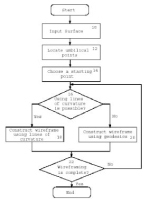 If it were to be written down on paper an algorithm would look like a long list of very detailed instructions.
In fact this is what it is, as it tells the computer (or games console) what to do at every point in the game.
All the game’s graphics, sounds and programming are called up from a database storage system by the algorithm. The game responds to what the player is doing by treating their button presses as a series of commands.
Sometime the game is programmed to choose between a number of different options in order to surprise the player and keep the game interesting. But if you play a game often enough you will start to notice repeated patterns.
Thinking about the key elements of videogames gives us a basic understanding of what a videogame is. While what happens in a film or book cannot be changed by the viewer or reader, in videogames the player can change what happens because the game is controlled by an algorithm which allows the player to chose between different options, even different storylines.
However understanding what games do does not help us to understand anything about the form and content of the games themselves, or how they are perceived and interpreted by their players.
The next sections discuss some approaches we can use to analyse these aspects of videogames.
Subscribe to:
Posts (Atom)